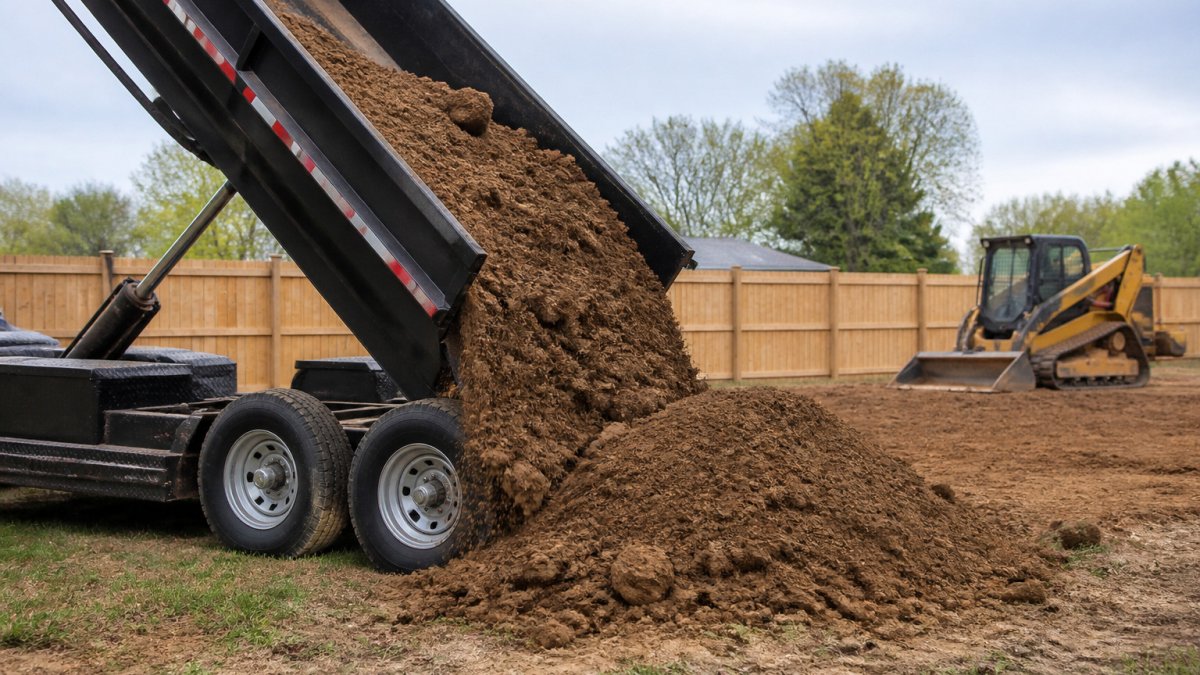
Last Updated: October 28, 2026
Quick Summary
Dirt hauling in Norman covers delivering fill dirt, topsoil, sand, or gravel to your property, or removing excess soil and debris. Before hiring, confirm the company's equipment, site access, exact material, and an itemized written quote. Matching the material to your goal matters most.
- Confirm the company has equipment suited to your site and that a loaded truck can reach the drop point.
- Know exactly which material you need, since fill dirt is not meant for planting.
- Divide total cubic feet by 27 to convert to cubic yards, then divide by truck capacity to estimate loads.
- Request a written, itemized quote covering delivery, labor, and any disposal fees.
- Check with the City of Norman about grading permits before major fill or regrading near a foundation or drainage path.
Table of Contents
- Choosing the Right Material: Fill Dirt, Topsoil, Sand, and Gravel
- How to Calculate Dirt Volume and Truckloads
- Fill Dirt Delivery: Site Access, Unloading, and Preparation
- What Affects Your Dirt Hauling Cost
- Yard Grading Services and Dirt Removal and Hauling
- Getting a Dirt Hauling Quote From NexGen Dirt & Haul
- Frequently Asked Questions
Dirt hauling in Norman can involve bringing material to your property or taking unwanted soil or debris away. NexGen Dirt & Haul provides dirt work, hauling, and cleanup services for homeowners, landlords, and contractors in the OKC metro area. Send photos, approximate measurements, and access details to discuss the project.
Dirt hauling covers several related jobs. Delivery brings in fill dirt, topsoil, sand, or gravel. You can compare local dirt, gravel, and aggregate delivery options for Norman before you order. Removal takes out excess soil, old material, or construction debris. Some providers also grade the surface once the material is placed. The right service depends on whether you're adding material, moving it, or clearing it out. Ask which of these your project needs before you call anyone.
Here are seven things worth checking before you hire anyone for the job:
- Equipment: Confirm the company has equipment suited to your site.
- Access: Make sure a loaded truck can reach the drop point without tearing up your lawn.
- Material clarity: Know exactly what you're buying, whether that's fill dirt, topsoil, or crusher run.
- Quantity estimate: Ask how the crew calculates volume and how many loads you'll need.
- Itemized quote: Request a written breakdown of delivery, labor, and any disposal fees.
- Schedule: Ask when they can realistically arrive, not just when they can start.
- Cleanup: Confirm who spreads the material and who cleans up afterward.
Ask a few specific questions up front to clarify the project before any dirt moves.
Choosing the Right Material: Fill Dirt, Topsoil, Sand, and Gravel
Each material does a different job, and picking the wrong one is one of the most expensive mistakes homeowners make. Fill dirt is subsoil used to raise low spots and build up grade. It isn't meant for planting. Topsoil is the nutrient-rich layer you spread over a lawn or garden bed. Sand works for leveling pavers or improving drainage in some soils. Gravel and crusher run create a firm base for driveways and walkways.
Don't assume the cheapest option is the right one. Fill dirt over a planting bed will leave you with poor growing conditions, and topsoil under a driveway will settle. Describe your end goal to the provider and ask which material fits it. A good crew will tell you when you don't need what you asked for.
Quality checks matter too. Ask where the material comes from and whether it's screened or contains debris. Rocks, roots, and trash in fill dirt cause problems later when you try to grade or plant.
How to Calculate Dirt Volume and Truckloads
Measure the length, width, and average depth of the area you're filling, in feet. Multiply those three numbers to get cubic feet, then divide by 27 to convert to cubic yards. A 20-by-30-foot area spread 4 inches deep works out to roughly 6 cubic yards.
Dump trucks usually carry a set capacity, often in the range of ten to fifteen cubic yards per load. Divide your total cubic yards by that capacity to estimate how many truckloads you'll need. Always add a little extra, since soil settles and compacts after it's placed. Ask the provider to confirm their truck size, because capacities vary and the number of loads directly affects your total.
Use these figures from the volume section to estimate how many loads your project needs.
| Item | Value | Note |
|---|---|---|
| Cubic feet to cubic yards | Divide by 27 | Convert total cubic feet before estimating loads |
| Example area | 20 by 30 feet, 4 inches deep | Roughly 6 cubic yards |
| Typical truck capacity | Ten to fifteen cubic yards | Varies by provider; confirm their truck size |
| Extra allowance | Add a little more | Soil settles and compacts after placement |
Fill Dirt Delivery: Site Access, Unloading, and Preparation
Before work, clear vehicles, toys, and loose items from the area. If digging is involved, make sure underground utilities are located.
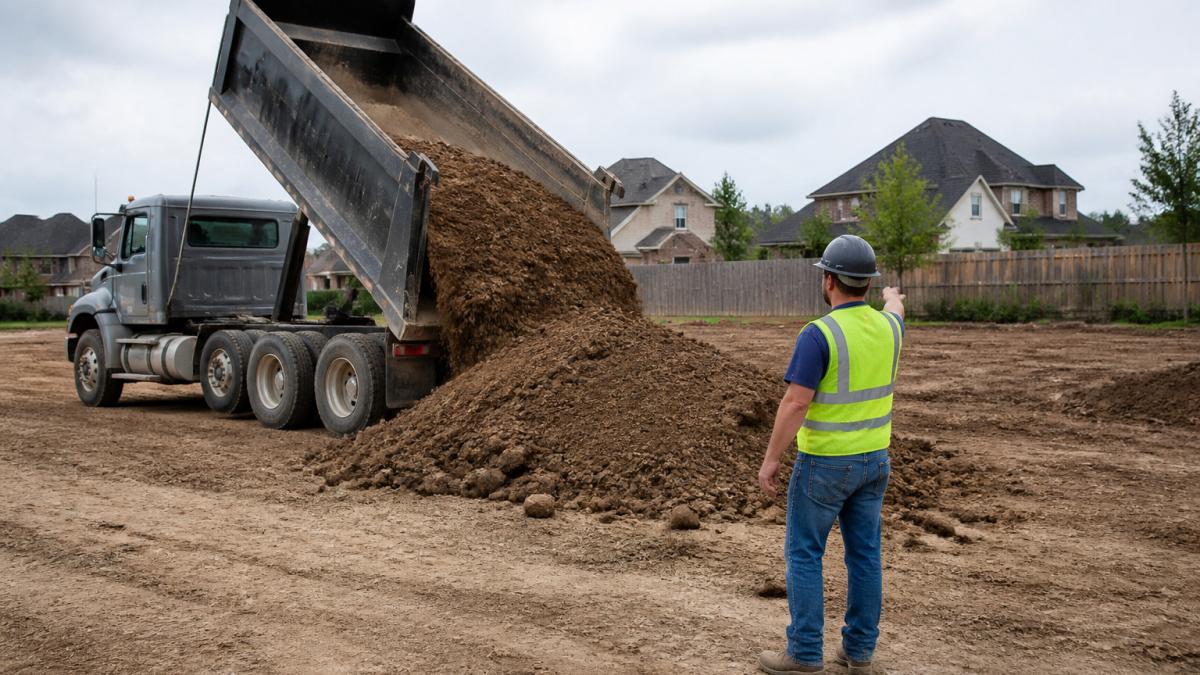
Check access points before work. If the path is tight, include access details when you request a quote.
Discuss the project scope and access details when requesting a quote.
What Affects Your Dirt Hauling Cost
Ask providers how their quotes are structured so you can compare them.
Compare the details of each quote.
For current pricing, visit NexGen Dirt & Haul's website or request a quote.
Yard Grading Services and Dirt Removal and Hauling
Grading can address uneven areas and drainage-related dirt work. The appropriate approach depends on the property and site conditions.
Grading work usually falls into a few patterns:
- Low spots and puddles. Yard grading can address uneven areas and low spots.
- Drainage-related dirt work. Grading can address drainage-related site conditions.
- Driveway repairs. Driveway repairs are among the services NexGen Dirt & Haul provides. You can see how gravel driveway refreshes and spreading are handled before requesting a quote.
- Site preparation. Small excavation and site preparation are among the services NexGen Dirt & Haul provides.
Debris removal is among the services NexGen Dirt & Haul provides. Discuss the project scope and site conditions when requesting a quote.
Discuss the project scope and the services needed when requesting a quote.
Getting a Dirt Hauling Quote From NexGen Dirt & Haul
Start with a clear description of the job, including its location, approximate measurements, photos, and access details. NexGen Dirt & Haul offers a quote process by text message.
Review the quote and ask about anything that is unclear before approving the work.
Frequently Asked Questions
What types of dirt can be hauled and delivered?
NexGen Dirt & Haul provides dirt work, hauling, and cleanup services. Describe your project and send photos, approximate measurements, and access details to discuss the scope and request a quote.
How do I know how much fill dirt my project needs?
Measure the area in feet, multiply length by width by the depth you want to add, then divide by 27 to convert cubic feet to cubic yards. For example, a 20-by-30-foot area raised 6 inches needs about 3.7 cubic yards. Sending photos, approximate measurements, and access details when you request a quote helps NexGen Dirt & Haul review the project scope.
What should I ask before hiring a dirt hauling service?
Ask what the quote covers and what happens if the project scope changes. NexGen Dirt & Haul offers a quote process by text message, so you can share project photos and discuss pricing.
What affects the cost of dirt hauling?
Pricing depends on labor, material quantities, equipment, travel, disposal or supplier fees, and site conditions. Visit the NexGen Dirt & Haul pricing page or request a free quote for current pricing.
