Last Updated: November 7, 2026
Quick Summary
Excavation for septic system installation means digging the tank hole and drainfield trenches to the depths, slopes and bedding specified by the manufacturer and approved permit drawings. Careful digging creates a level tank bed and clean drainfield soil, which helps the whole system work.
- Call 811 to have underground utilities marked before any excavation begins.
- Cross-check the tank manual, permit drawings and county rules before the machine moves.
- Use a laser level or transit to set drainfield trench slope, not eyeballing.
- Keep equipment off the finished drainfield area to avoid compacting soil and slowing drainage.
- Do not cover any component until the inspector has signed off on it.
Table of Contents
- Why Excavation Decides Whether Your Septic System Works
- Site Preparation, Access and Locating Underground Utilities
- Septic System Excavation Depth for the Tank and Drainfield
- Septic System Excavation Equipment and What Each Machine Does
- How to Install a Septic System in Clay Soil
- Septic Tank Excavation Cost and the Factors That Move It
- Permits, Inspections and Checkpoints Before Backfill
- Book a Site Assessment Before You Dig
- Frequently Asked Questions
Why Excavation Decides Whether Your Septic System Works
Most septic failures start in the hole, not the tank. Most septic problems on residential jobs trace back to a tank set in the wrong spot, a trench cut too shallow, or soil dug out too wet. Careful excavation for septic system installation is the step that sets everything else in motion.
Here is the short version. The tank needs a level, stable bed. The drainfield needs clean, undisturbed soil that drains at the right rate. Get the digging right and the rest of the system has a fair chance. Get it wrong and you pay for it later.
Watch out: digging a septic trench too close to a foundation or utility line can undermine both. Call before you dig and confirm the layout before the machine moves.
Site Preparation, Access and Locating Underground Utilities
Before any excavation for a septic system installation begins, clear the site and confirm where everything is. Start with the basics:
- Mark the property lines and confirm setback distances from wells, structures and water lines
- Clear brush, debris and old concrete from the work area, or hire a local brush removal and small-lot clearing service to do it for you.
- Make sure a truck and excavator can reach the spot without tearing up the yard
- Call 811 to have underground utilities marked before any excavation begins (811 Before You Dig)
Calling 811 before digging is the standard first step on residential excavation work (811 Before You Dig). Utility lines do not always sit where maps say they do, so do not skip the step even on a small lot.
Clear, level access also matters for the delivery truck that brings the tank. Plan the route before the crew arrives. If the site is hard to reach, access may need cleanup and grading before the delivery truck arrives.
Septic System Excavation Depth for the Tank and Drainfield
Depth is where most excavation mistakes get buried, literally. The tank hole and the drainfield trenches follow different rules, and both are governed by the manufacturer's installation instructions and the approved permit drawings rather than by a universal number.
Tank hole depth and bedding. The goal is a tank whose lid sits at or slightly above final grade so surface water sheds away and access risers stay serviceable. A common residential pattern is:
- Excavate the hole deep enough to leave room for bedding and any required anchoring, following the tank manufacturer's instructions.
- Place a compacted bedding layer under the tank as specified by the manufacturer, with the tank bearing evenly across the full footprint.
- Keep the hole bottom level across the tank footprint. A tank that rocks or bridges on high spots can crack at the seams after backfill.
- Confirm the finished lid elevation against the permit drawing before the tank is set. Raising a tank later means re-excavating around it.
Drainfield trench depth and slope. Drainfield trenches are generally shallower than the tank hole, and their grade must follow the design. The designer's plan will state the exact slope for the distribution pipe, and a laser level or transit, not eyeballing, should set the grade.
- Dig trenches to the width and depth on the drawing, then dress the bottom so the gravel bed and pipe sit at the specified elevation.
- Keep trench bottoms uniform. Low spots collect effluent and high spots starve the far end of the field.
- Where the plan calls for a serial or distribution-box layout, verify the trench elevations against the design before backfilling.
Watch out: a trench dug even a couple of inches off the specified slope can leave effluent standing in the pipe or push it to one end of the field, and correcting it after inspection means re-digging the trench.
Tolerances and the code caveat. Local health departments set minimum setbacks, required bedding, and inspection hold points, and those requirements vary widely by jurisdiction. Some also require the tank to be anchored or ballasted against buoyancy in high-groundwater sites.
Septic System Excavation Equipment and What Each Machine Does
Residential septic jobs commonly use a compact or mid-size excavator for the tank hole and trenches, and a skid steer or small loader for moving material and backfill.
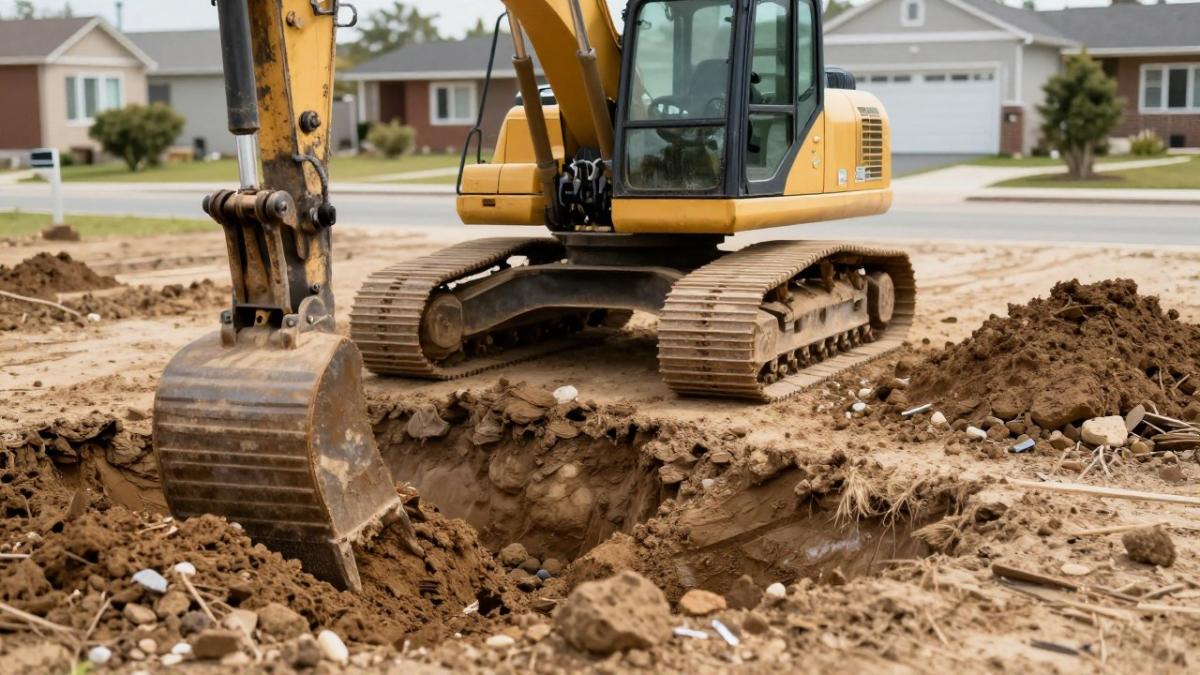
Here is how the main machines typically fit in:
| Machine | Main job | Best for |
|---|---|---|
| Mini excavator | Tank hole and trenches | Tight residential lots |
| Skid steer | Grading and moving fill | Backfill and site leveling |
| Dump truck | Hauling spoil and gravel | Larger volumes |
| Plate compactor | Packing base material | Tank bedding and backfill |
Keep the machine off the finished drainfield area. Compacting natural soil where the trench will go can seal it and slow drainage.
How to Install a Septic System in Clay Soil
Clay soil drains slowly, so the excavation plan changes. Clay holds water and can make a drainfield fail even when the trench is dug correctly.
A practical sequence for clay sites:
- Run a soil evaluation before you design the system, since clay sites may need a different drainfield design.
- Dig the trench to the depth and slope on the permit drawing.
- Avoid smearing the trench walls. Scrape and loosen the bottom lightly by hand if needed.
- Add the gravel bed and distribution pipe as the designer specifies.
- Backfill with suitable material and avoid heavy traffic over the field.
Because clay is sensitive to moisture, avoid digging when the soil is saturated. Wet clay gets smeared and compacted, and that damage is hard to undo.
Septic Tank Excavation Cost and the Factors That Move It
Pricing for septic excavation depends on the site and the scope of the job. Several factors move the cost up or down:
- Size of the tank hole and trench length
- Soil type, especially rock or clay that slows digging
- Distance to the work area and access for equipment
- Amount of spoil to haul away
- Permit, inspection and utility-marking requirements
For current pricing, check the NexGen Dirt & Haul pricing page or request a quote. Prices depend on quantity, access and the scope of the job, so a quote based on photos of your site is the most reliable starting point.
Some homeowners compare professional excavation with doing it themselves. A DIY dig can save on labor, but mistakes in depth, slope or utility location often cost more to fix than the original job.
Permits, Inspections and Checkpoints Before Backfill
Permits and inspections are the paper trail, but the hours between breaking ground and backfilling are also when the real risks and surprises show up. Handle both together so the hole is safe, the work passes inspection the first time, and unexpected conditions do not turn into a re-dig.
Permits and inspection hold points. Septic work is regulated at the county or local health-department level, and most jurisdictions require an installation permit before excavation plus inspections at defined stages. A typical sequence looks like this:
- Permit issued and approved drawings on site before digging begins.
- Utility locate confirmed (call 811) and setbacks from wells, foundations, and property lines marked.
- Tank hole depth, bedding, and level confirmed before the tank is set.
- Tank set, anchored if required, and lid elevation checked.
- Trench depth, slope, and gravel bed inspected before pipe is covered.
- Distribution box and pipe connections verified.
- Final inspection and sign-off before backfill and grading.
Do not cover any inspected component until the inspector has signed off. Covering early is one of the most common causes of full re-excavation, and some jurisdictions will require the work to be reopened at the owner's expense.
Excavation safety and protective systems. A septic hole is a confined space with sloped or vertical walls, and cave-ins are the leading hazard. Most practitioners follow these rules on residential jobs:
- Keep spoil and equipment back from the excavation edge, and avoid stockpiling heavy material on the lip.
- Provide a ladder or ramp for access and egress; workers should not jump in and out of a trench.
- Trenches deep enough to pose a collapse risk need protective systems, and the excavation should be inspected regularly and after rain.
- Keep water pumped out. Standing water destabilizes walls and softens the bedding.
- Establish an equipment exclusion zone so the excavator operator and workers on foot are never in the same swing radius.
Watch out: a trench that looks stable in dry clay can fail suddenly after a rain or when vibration from equipment loosens the walls, so re-inspect before anyone re-enters.
Unexpected conditions and troubleshooting. Even a well-planned dig hits surprises. Work through them in order rather than improvising:
- Rock: If excavation reaches bedrock above the design elevation, stop and contact the designer. The fix may be a raised drainfield, blasting (rarely permitted residentially), or a redesigned system, not brute force.
- Unstable or wet soil: If the hole bottom pumps or walls slough, over-excavate and replace with compacted structural fill per the designer's direction rather than bedding the tank on disturbed soil.
- Groundwater: If groundwater enters the hole, dewater and confirm with the designer whether the tank needs ballasting or the drainfield needs a raised design.
- Buried utilities not on the locate: Stop digging, hand-expose the line, and call the utility owner before proceeding.
- Over-dig (too deep or too wide): Do not simply backfill with loose spoil. Compact suitable fill in lifts to the design elevation, or get the designer's approval for the repair, and document it for the inspector.
Documentation for the inspector. Photograph the tank hole, bedding, tank set, trench grade, and pipe connections before covering anything. Many inspectors accept or request photos, and a clean photo record resolves disputes quickly.
Book a Site Assessment Before You Dig
A short site visit can catch problems before the machine starts. Soil, access, utility locations and the permit layout all affect the plan. Send photos of your lot to NexGen Dirt & Haul to start, and get a quote before any digging begins.
Frequently Asked Questions
What size excavator do I need to install a septic system?
Most residential septic tank holes are dug with a mid-size excavator, because it can reach the required depth and still fit between fences, trees and structures. Smaller compact machines can handle the drainfield trenches and tight access points. The right size depends on tank size, how deep the hole must go, the width of the work area and whether the machine can reach the dig site without damaging the lawn or existing utilities. Confirm the equipment plan with your installer before work starts.
Can I dig and install my own septic system?
Many jurisdictions require a licensed installer or a permit issued to the homeowner, and local rules apply. Even where owner installation is allowed, the excavation must meet the depth, setback and soil requirements on the approved plan, and an inspector will need to see the open excavation before backfill. Errors in grade or trench width can cause drainage failure. Check with your local health department or county environmental office before you dig anything.
How deep do you dig for a septic system?
Septic tank excavation depth depends on the tank's height, the outlet and inlet pipe elevations, and the slope of the sewer line from the house. Tank holes are commonly dug deep enough to set the tank with its top at or just below grade, with a stable base of compacted gravel or sand. Drainfield trenches are usually shallow, but the exact depth is set by the approved design and the soil profile. Use the depths on your permit, not a general figure.
How much does it cost to dig a septic system?
Excavation pricing depends on quantity of material, access, depth, soil conditions, equipment needed and delivery or disposal requirements. Because every lot is different, NexGen Dirt & Haul does not publish a typical cost for septic excavation. For current pricing or a quote for your project, visit the NexGen Dirt & Haul pricing page or send a photo of your site for a quote. Ask any provider for a written estimate that lists what is included and what could change the price.
