Quick Summary
A dirt work contractor moves, grades, hauls, and shapes the earth on a property, covering yard grading, slab leveling, gravel spreading, and debris removal. To choose one well, get a written scope with a line-item quote, confirm insurance before work starts, and ask how they handle drainage, hauling, and buried utilities.
- Ask for quotes broken into mobilization, labor and equipment, material, hauling and disposal, and permits.
- Material is often priced by the cubic yard, and a standard dump truck carries 10 to 14 cubic yards.
- Call 811 before any digging so underground utility lines are marked, and confirm the markings are current.
- Private lines like sprinkler systems and septic components are not marked by 811 and are the owner's responsibility.
- Confirm proof of insurance before the crew starts, and avoid contractors who won't provide a written scope.
Table of Contents
- What a Dirt Work Contractor Actually Does
- Dirt Work Contractor in Norman, OK Prices and What Drives Them
- How Yard Grading and Drainage Solutions Protect Your Property
- Driveway Regrading Services for Gravel and Rough Drives
- Residential Excavation Services: Equipment, Permits and Utility Locates
- How to Choose a Local Dirt Work Contractor
- Getting Your Free Quote and Scheduling Your Dirt Work
- Frequently Asked Questions
What a Dirt Work Contractor Actually Does
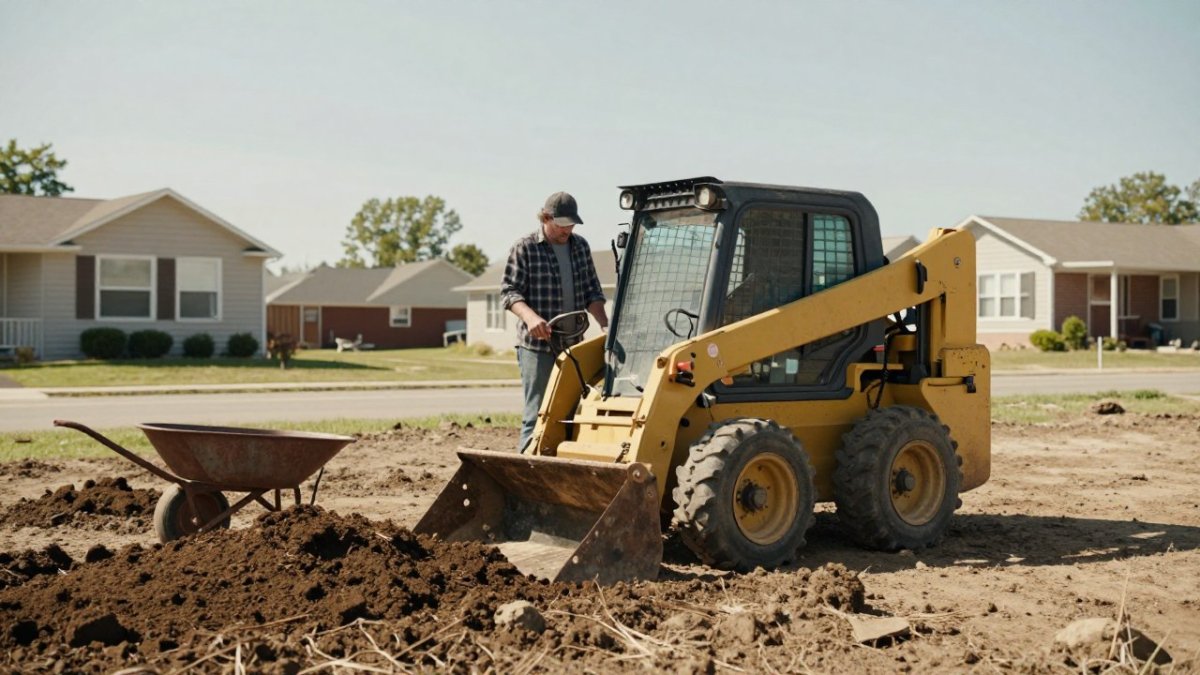
A dirt work contractor moves, shapes, and hauls the earth on a property. That covers grading a yard, leveling ground for a slab, spreading gravel, clearing debris, and carting away old material. Most dirt work jobs fall into a few groups: yard grading and leveling, driveway refreshes, small excavation, and hauling away brush, concrete, and other debris.
The work sounds simple. The results depend on how it is done. Grade set too flat or pitched the wrong way can send rainwater toward a foundation instead of away from it. Fill laid down without compaction can settle and leave a dip within a season. A good contractor looks at the property first, then picks equipment and methods that fit the site.
Equipment matters too. Small compact tracked machines fit tight side yards and gates that a full-size excavator cannot reach.
Dirt Work Contractor in Norman, OK Prices and What Drives Them
Most dirt work quotes are built from four inputs: the volume of material moved, the distance it travels, the time the machine spends on site, and the disposal or tipping fees for anything hauled away. Understanding how each one moves the number is the difference between comparing quotes fairly and getting surprised at the end.
Volume and material. Dirt, gravel, and crusher run are sold and hauled by the cubic yard. A single tandem-axle dump truck typically carries 10 to 14 cubic yards of material, so a job that needs 30 yards of fill is roughly three truckloads before any grading begins. Ask whether the quote lists material by the yard or as a lump sum; a lump sum hides how much is actually coming in. You can compare local dirt, gravel, crusher run and sand delivery options for Norman before you commit.
Haul distance and access. Material hauled from a supplier or spoil site is priced partly by the round trip. A tight side yard, a fence line, or a gate narrower than the machine forces smaller equipment and more trips, which raises labor hours even when the material volume is the same.
Ground conditions. Hard, rocky ground, old concrete, or buried debris slows the machine and may require breaking, loading, and separate disposal. Soft, wet ground can require matting or a different machine to avoid rutting the site. Both change the time estimate, and time is the largest line on most residential dirt work invoices.
Disposal and tipping fees. Concrete, brush, and spoiled soil usually carry a per-load charge at the receiving facility. Ask whether disposal is included, billed at cost, or excluded. A quote that leaves disposal out is not comparable to one that includes it.
A cost-to-expect framework. Rather than a single number, ask for a quote broken into these lines: mobilization, grading or excavation labor and equipment, material delivered, hauling and disposal, and any permit or locate cost. That structure lets you compare two contractors line by line instead of guessing why one number is lower.
Watch out: a verbal 'about' price with no scope attached can lead to disagreements, insist on a written breakdown before any crew mobilizes. You can request a quote from NexGen Dirt & Haul by texting a photo of your project.
How Yard Grading and Drainage Solutions Protect Your Property
Grading is the slope of the ground around your home and yard. Water should move away from the house. When the grade is off, water pools against the foundation, soaks the soil, and can cause cracks, wet crawl spaces, and soggy lawns.
Good grading fixes this. The ground is shaped so water runs off to a low point, a swale, or a drain. Drainage solutions can include regrading, adding fill, shaping a shallow channel, or setting up a way to carry water from a problem spot. Which fix is right depends on the property, so a contractor should look at the drainage before choosing a method.
A good job checks where water actually goes during a heavy rain, then grades to match that. Ask your contractor how they plan to direct runoff, not just how the yard will look when they finish.
Driveway Regrading Services for Gravel and Rough Drives
A gravel driveway wears down over time. Ruts form, washboard ridges appear, and loose stone migrates to the edges. Regrading pulls the surface back into shape, adds new crusher run or gravel where it has thinned, and compacts the layer so it holds up.
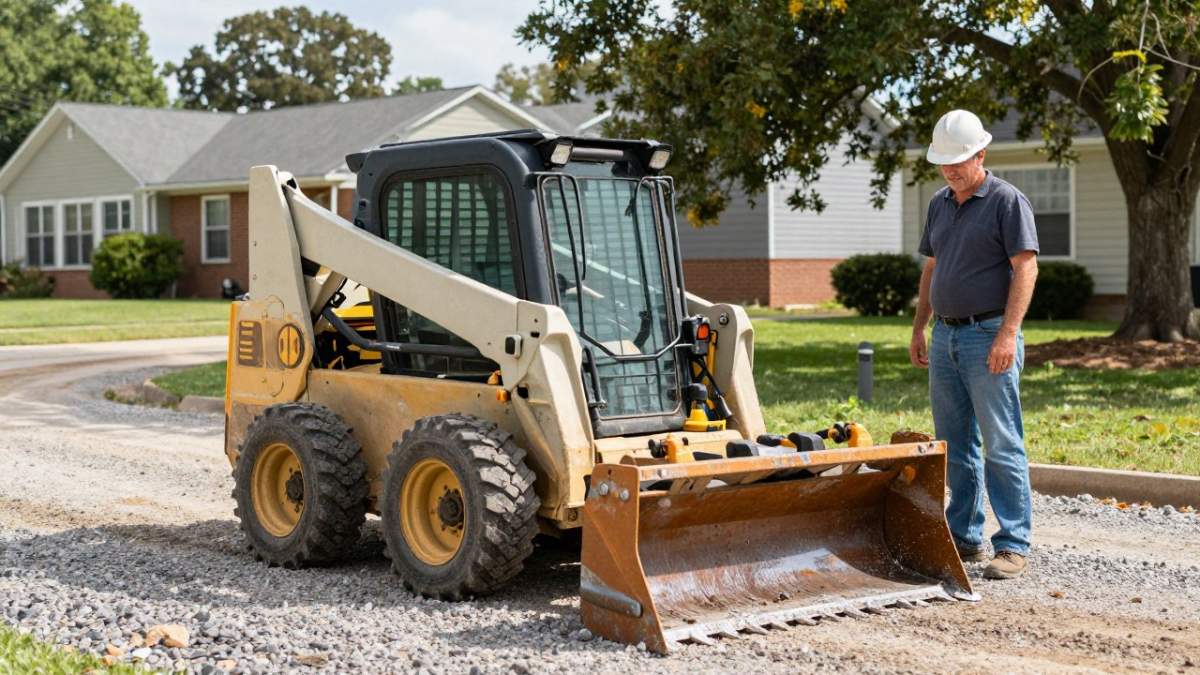
Regrading is usually faster and cheaper than replacing the whole drive. It works well when the base is still solid and the problem is surface wear. If the drive is sinking in spots or the base is soft, the crew may need to dig out the bad material and rebuild those areas first.
Ask whether the crew will also fix drainage along the drive. A driveway that sheds water properly lasts longer, and the ruts that form on poorly graded drives are usually the first sign of trouble.
Residential Excavation Services: Equipment, Permits and Utility Locates
Residential excavation covers digging for foundations, trenches, ponds, and site prep for new builds. It is the part of dirt work where mistakes cost the most, mainly because of buried utilities and because the ground itself dictates the method.
Utility locates. Before any digging, call 811 to have underground utility lines marked (811 Before You Dig). The free call routes to Oklahoma 811, and most utility companies mark their lines within a few business days. The locate covers the public lines up to the meter; private lines, sprinkler systems, landscape lighting, gas lines to a shop or pool, and septic components, are the property owner's responsibility and are not marked by 811. Ask your contractor whether they handle the locate request or expect you to make it, and whether they will walk the markings with you before the machine starts.
Watch out: hitting a gas or water line can cause serious injury, expensive repairs, and service outages, and a locate ticket that has expired is not protection, confirm the markings are current on the day of digging.
Permits and local review. Permits depend on the type and scale of the work. Major grading, retaining walls over a certain height, changes to drainage that affect neighboring property, and new impervious surfaces can require approval from the local building or planning office. Check with the City of Norman or the relevant local office before work starts, and ask your contractor who will pull any required permit and who is responsible if the scope changes mid-job. Permit rules vary by project, so confirm the details directly with the city rather than relying on a general rule of thumb.
Soil composition and method. Soils in many areas include clay-heavy material that holds water and expands when wet, and rocky or gravelly patches that dull equipment and slow trenching. Clay soil can require different backfill and compaction than sandy soil, and a trench in wet clay may need shoring or a wider cut to stay safe. Ask your contractor how they plan to handle the soil they expect to hit and whether imported fill will be needed to replace unsuitable material.
Equipment choice. Compact tracked machines suit tight lots and protect existing landscaping. Larger machines move more dirt quickly on open sites. Ask what equipment will be used, how it will get onto your property, and how the crew will protect sprinkler heads, fences, and driveways during the dig. Equipment choice affects both cost and results, and the right machine for a tight backyard is rarely the right machine for a new-build pad.
How to Choose a Local Dirt Work Contractor
Start by checking how the company works. Ask for references from recent local jobs, and look at photos of finished work. Our guide to property cleanup services in OKC explains what a reliable crew should cover and how to verify one. A contractor who has done driveways and yard grading in your area will understand the soil and drainage problems you are likely to face.
Confirm that any contractor you hire is insured and carries the licenses the work requires. Ask for proof of insurance before the crew starts, not after. Get the scope in writing: what will be graded, what material is coming in, what is being hauled out, and what the final cost includes.
Watch for red flags. Vague quotes, no written scope, pressure to pay everything up front, and no answer about hauling or disposal should make you pause. A reliable contractor answers these questions plainly.
Ask how they protect landscaping, sprinkler heads, and fences during the job. Clear communication about start dates and timing matters too, especially if you are a landlord turning a unit or a builder waiting on a site.
Getting Your Free Quote and Scheduling Your Dirt Work
Getting started is simple. Know what you want before the crew arrives so they can begin right away. Take photos of the area, note the approximate size, and mention any problem spots like standing water, ruts, or old concrete. Clear goals help the crew give you an accurate plan.
NexGen Dirt & Haul makes the quote process easy. Text a photo of your project to get clear pricing. We will confirm the scope and cost before any work begins.
Once you approve the quote, we will schedule the crew. Whether you are a homeowner leveling a backyard, a landlord cleaning up between tenants, or a contractor needing site prep, we are here to help with the job. Send a text with your project photo today and get your free quote.
Frequently Asked Questions
What is a dirt work contractor?
A dirt work contractor moves, shapes and hauls soil and debris on residential and small commercial properties. Typical jobs include grading a yard, leveling ground before a build, regrading a gravel driveway, clearing brush and hauling away old concrete or fill. Good contractors also check how the site drains before any soil moves, since the grade you leave behind decides where water goes after the next storm. When you search for a dirt work contractor in Norman, OK, look for one who asks about drainage and access before quoting, not only about volume.
How much does dirt work cost in Norman, OK?
Pricing depends on the volume of dirt or debris, how far material must be hauled, site access, equipment needed and the number of visits. NexGen Dirt & Haul does not publish fixed rates in this article, so the most accurate way to compare dirt work contractor prices in Norman, OK is to request a quote with a photo and a description of the job. Ask every contractor whether the quote includes disposal fees and cleanup, and whether it is a fixed price or an estimate that can change once the crew sees the site.
Do I need drainage work when grading my yard?
Often, yes. Grading that looks level can still send water toward your foundation or pool it in low spots. When a dirt work contractor regrades a yard, the drainage plan should be part of the job from the start, so the new slope carries runoff away from the house and into a suitable outlet. Ask the contractor how the finished grade will direct water before you approve the work.
What should I ask before hiring a dirt work contractor?
Ask whether the company is licensed and insured, how long they have operated locally, and whether they can show photos of similar jobs. Confirm who will pull any required permits and who is responsible for locating underground utilities before digging. Request a written quote that lists scope, disposal and any extra charges. Finally, ask when the crew can start, since reliable scheduling matters most for landlords and contractors working between tenants or builds.
