Last Updated: November 10, 2026
Quick Summary
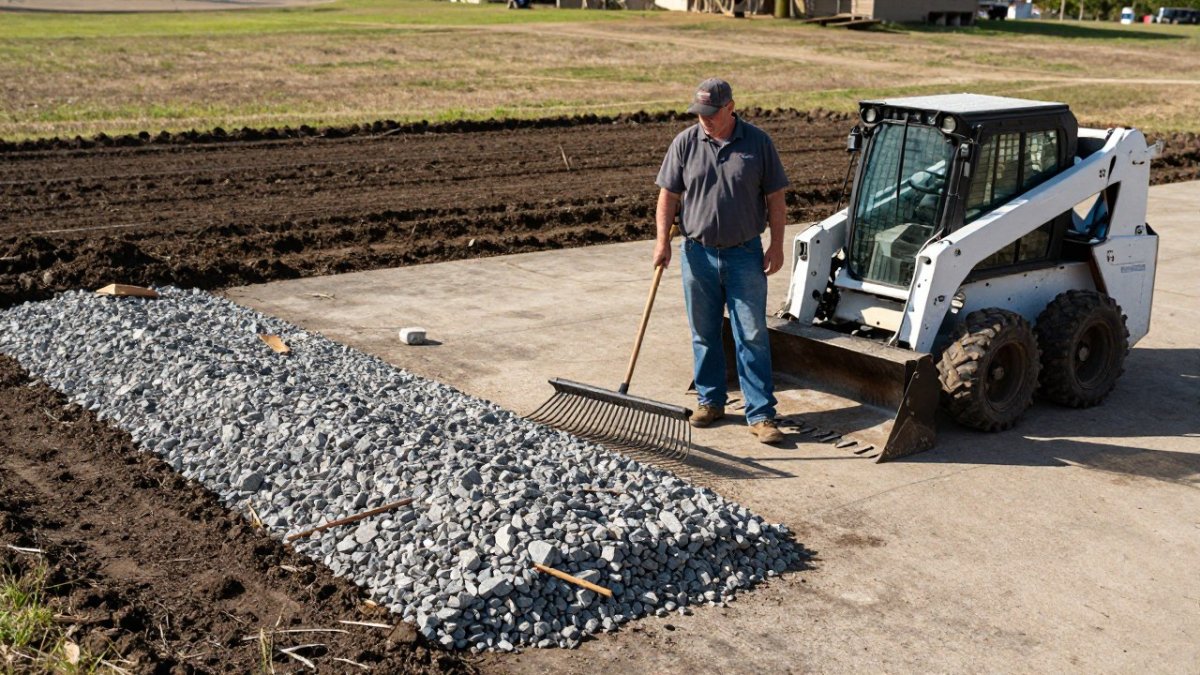
The best gravel driveway base is a compacted layer of crushed, angular stone that spreads vehicle weight across the soil and moves water away from the surface. Crusher run gravel is commonly used as a base because its stone dust and fines compact into a tight, load-bearing surface, while clean stone drains fast but does not lock together.
- A gravel driveway has three layers: subgrade soil, a compacted crushed stone base, and a surface layer.
- Base goes down in lifts of two to four inches and gets compacted between each lift.
- Use 4 inches of compacted base for light cars on well-drained soil and 8 to 12 inches for heavy trucks or RVs.
- Add 2 to 4 inches over standard base depths on clay or poorly drained soil and use geotextile fabric.
- Add a 25 percent compaction allowance when ordering, since stone compacts down as much as a quarter of its loose depth.
Table of Contents
- What the Best Gravel Driveway Base Actually Does
- Gravel Driveway Layers: Base, Surface, and Subgrade Explained
- Crusher Run Gravel vs. Clean Stone: Which Base Holds Up
- Driveway Gravel Size Chart: Matching Stone to Each Layer
- Base Depth, Material Quantities, and Geotextile Fabric
- Best Gravel for a Driveway on a Hill or Tough Soil
- Get Your Driveway Base Graded Right the First Time
- Frequently Asked Questions
What the Best Gravel Driveway Base Actually Does
The best gravel driveway base is a compacted layer of crushed, angular stone that spreads vehicle weight across the soil and moves water away from the surface. Get that layer right and the driveway lasts. Get it wrong and you'll be re-grading mud every spring.
Most driveway failures start below the surface, not on top of it. A base that isn't graded for drainage will rut, pothole, and pump mud no matter how nice the top stone looks on day one.
Below, we'll walk through the seven base materials worth considering, how each layer works, and what to check before you buy. We'll also show you the depth and quantity numbers you need so you order the right amount the first time.
Here's what most guides get wrong: they treat the base as a single product when it's really a system of stone sizes working together.
Gravel Driveway Layers: Base, Surface, and Subgrade Explained
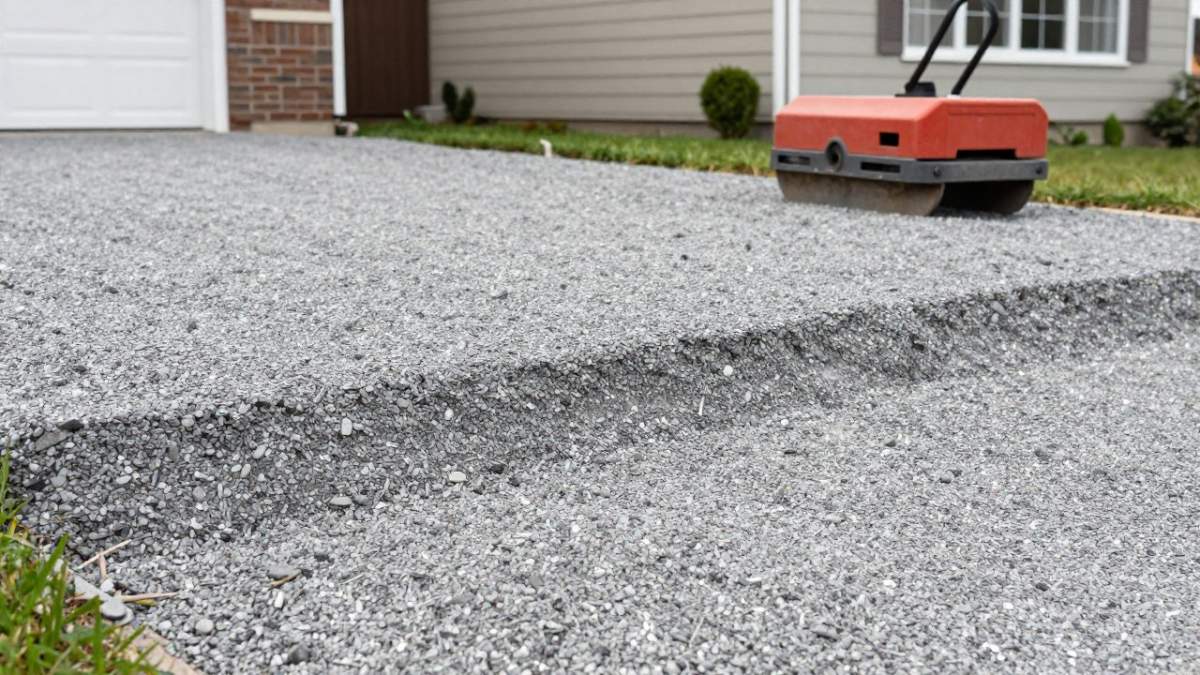
A gravel driveway has three layers. The subgrade is the native soil you build on. The base layer is compacted crushed stone that carries the load. The surface layer is the smaller stone you drive on and see.
Each layer does a different job, and each needs a different stone size. The subgrade gets graded and compacted first. The base goes down in lifts, usually two to four inches at a time, and gets compacted between each lift. The surface layer goes on last, at about two to three inches.
Skip the compaction step and you've built a loose pile, not a driveway. That's the part most crews rush, and it's the part that shows up as ruts six months later.
Crusher Run Gravel vs. Clean Stone: Which Base Holds Up
Crusher run gravel is commonly used as a base for driveways. It's crushed stone mixed with stone dust and fines, and that mix compacts into a tight, load-bearing surface. Clean stone has the fines washed out, so it drains fast but does not lock together.
Here's a side-by-side comparison of common base materials:
| Base material | Stability under load | Drainage | Relative material cost | Best suited to |
|---|---|---|---|---|
| Crusher run (quarry process, dense-graded aggregate) | High, fines bind and compact into a tight matrix | Moderate, sheds surface water but holds some moisture if graded flat | Low to moderate, usually the least expensive crushed option per ton | Most residential driveways, clay and tight soils, any base that needs to lock together |
| Dense-graded crushed stone (for example, a state-spec base aggregate) | High, engineered gradation from coarse stone down to dust | Moderate, similar to crusher run when compacted | Moderate, often priced above generic crusher run because of tighter gradation specs | Driveways where a supplier or inspector wants a documented gradation, heavier vehicle loads |
| Clean stone (No. 57, No. 4) | Low, no fines, so it stays loose and shifts under tires | High, water passes straight through | Low to moderate | Drainage layers, French drains, top coats over a stable base, not a standalone base on soft soil |
| Recycled aggregate (crushed concrete, recycled asphalt) | Moderate to high, crushed concrete compacts well; recycled asphalt binds but can soften in heat | Moderate, varies with the source material | Often the lowest-cost option where a local recycler supplies it | Budget-driven jobs, temporary or low-traffic driveways, sites where a local recycler is close |
A few mechanisms explain the differences. Crusher run and dense-graded stone work because the fines fill the voids between larger stones, and compaction locks the whole matrix into a stiff layer that spreads wheel loads. Clean stone has no fines to fill those voids, so it drains beautifully but each stone can move independently, fine as a drainage blanket, poor as a load-bearing base. Recycled concrete behaves much like crusher run when it's well graded and compacted, but quality varies by supplier, so ask what's in the pile before you buy.
A common mistake is using clean stone alone as a base on clay soil. Water runs straight through it and sits on the clay below, and the whole driveway turns to mush. On tight soil, crusher run with a drainage plan beats clean stone every time. The reverse is also true: on sandy, well-drained ground, a clean-stone drainage layer under a crusher-run base can help, but it never replaces the compacted base itself.
Driveway Gravel Size Chart: Matching Stone to Each Layer
Matching stone size to the right layer is the difference between a driveway that locks together and one that rolls around. Use this as a starting chart, then adjust for your soil and slope.
| Layer | Stone Type | Typical Size | Job It Does |
|---|---|---|---|
| Base | Crusher run, quarry process | 1 to 1.5 inch with fines | Carries load, compacts solid |
| Base (drainage) | No. 57 clean stone | 3/4 to 1 inch | Lets water pass through |
| Surface | No. 57 or No. 21A | 3/4 inch down to dust | Driveable top, knits together |
| Top dressing | Pea gravel or No. 8 | 3/8 inch | Smooth look, light traffic only |
Large gravel goes deep, medium gravel builds the surface, and fines do the locking. One-inch stone in the base, three-quarter-inch gravel on top, and stone dust to bind it. Pea gravel looks great but rolls under tires and buries itself in mud, so keep it for walkways and low-traffic spots.
Base Depth, Material Quantities, and Geotextile Fabric
Base depth depends on two things: what drives on the driveway and what soil sits underneath. A single number won't cover every job, so use these ranges as a starting point and adjust for your site.
| Condition | Compacted base depth | Surface stone on top |
|---|---|---|
| Light passenger cars, well-drained sandy or gravelly soil | 4 inches | 2 to 3 inches |
| Passenger cars and light trucks, average soil | 6 inches | 2 to 3 inches |
| Heavy trucks, RVs, or frequent deliveries | 8 to 12 inches | 3 inches |
| Clay or poorly drained soil, any traffic | Add 2 to 4 inches over the ranges above and use geotextile fabric | 2 to 3 inches |
| Freeze-thaw climate | 8 inches or more, with a clean-stone drainage layer where the subgrade stays wet | 2 to 3 inches |
Surface stone on top
On clay, the extra depth isn't optional. Clay holds water, swells, and loses strength when wet, so a thin base punches straight through it.
Geotextile fabric is a woven or non-woven sheet laid over the graded subgrade before the stone goes down. It separates the base stone from the soil so the two don't mix, which keeps the base draining and stops stone from sinking into mud.
To figure quantities, measure the area, multiply by the depth in feet, and divide by 27 to get cubic yards. Then add a compaction allowance, because stone compacts down as much as a quarter of its loose depth. A worked example: a 20-foot by 40-foot driveway is 800 square feet.
If you want the full breakdown, our guide on how much gravel do I need for a driveway walks through the measuring and the three layer depths step by step.
Watch out: ordering exactly the compacted volume without a compaction allowance is the most common quantity mistake, you'll come up short and pay a second delivery fee for a partial load.
Best Gravel for a Driveway on a Hill or Tough Soil
On a slope, the best gravel for a driveway on a hill is angular crushed stone that locks together, paired with grading that directs water off to the side. Rounded gravel rolls downhill. Angular stone stays put.
Grade matters more than stone choice on a hill. A driveway needs a crown, meaning the center sits slightly higher than the edges, so water runs off instead of pooling. Add a shallow side ditch or swale to carry runoff away from the base. Without that, heavy rain cuts channels through the surface and washes stone into the yard.
Clay soil is its own problem. It holds water, swells, and loses strength when wet. On clay, go deeper with the base, use geotextile fabric, and lean on crusher run over clean stone. If washouts are already a problem, our article on how to keep gravel from washing away covers grading fixes and stone choices that hold up in storms.
Watch out: skipping the crown and side drainage is the single most common reason a new driveway washes out in the first rainy season.
Get Your Driveway Base Graded Right the First Time
The stone is only as good as the grading under it. You can buy the right crusher run and still end up with ruts if the subgrade isn't shaped for drainage and compacted properly.
That's where we come in. NexGen Dirt & Haul is locally owned, and we handle gravel driveway repair and gravel spreading for homeowners and landlords who want it done right the first time. If you already know your material and just need it delivered, we also run gravel, dirt, and aggregate delivery for projects around the area.
Text us a photo of your driveway or project, and we'll give you clear pricing.
Want to see what the base and the whole job will run before you commit? Our breakdown of gravel driveway cost per square foot shows what materials, delivery, grading, and repairs actually include.
Know what you want before the crew arrives and the job moves fast. NexGen Dirt & Haul aims to leave your yard looking brand new when we're done.
A gravel driveway only performs as well as the base beneath it, and most washouts and ruts trace back to grading and drainage that got skipped. If your driveway is rutting, pooling, or you're starting fresh, NexGen Dirt & Haul uses real equipment for professional results. Text a photo of your project for straightforward pricing.
Frequently Asked Questions
What type of gravel is best for a driveway base?
Crusher run, also called quarry process or dense-graded aggregate, is the standard choice for a gravel driveway base. It blends crushed stone with stone dust and fines, so the mix compacts into a tight, load-bearing layer instead of staying loose. Clean stone like No. 57 drains fast but will not lock together on its own, which makes it better as a drainage or surface layer than as the structural base under traffic.
How thick should the base layer of a gravel driveway be?
For a residential drive with normal car and pickup traffic, plan on about 4 inches of compacted base over a prepared subgrade. Heavier use or soft clay soil calls for 6 to 8 inches, often built in two lifts so each layer compacts fully. Anything under 4 inches tends to rut and pump mud once the ground stays wet, which is where most failing driveways start.
What is the difference between crusher run and crushed stone?
Crushed stone is a broad term for angular rock broken from quarried material. Crusher run is a specific blend of that crushed stone plus the fine dust and small chips left from the crushing process. Those fines act as a binder when watered and compacted, giving crusher run far more stability as a gravel driveway base. Clean crushed stone has the fines screened out, so it drains well but shifts under tires.
What gravel is best for a driveway on a hill?
Angular, dense-graded stone such as crusher run is the best gravel for a driveway on a hill because the interlocking edges and fines resist rolling and washing downhill. Pair it with a crowned surface, a shallow drainage ditch on the uphill side, and a properly compacted subgrade. Rounded river rock is the worst pick on a slope since the smooth stones slide and channel water straight down the drive.
