Last Updated: November 4, 2026
Quick Summary
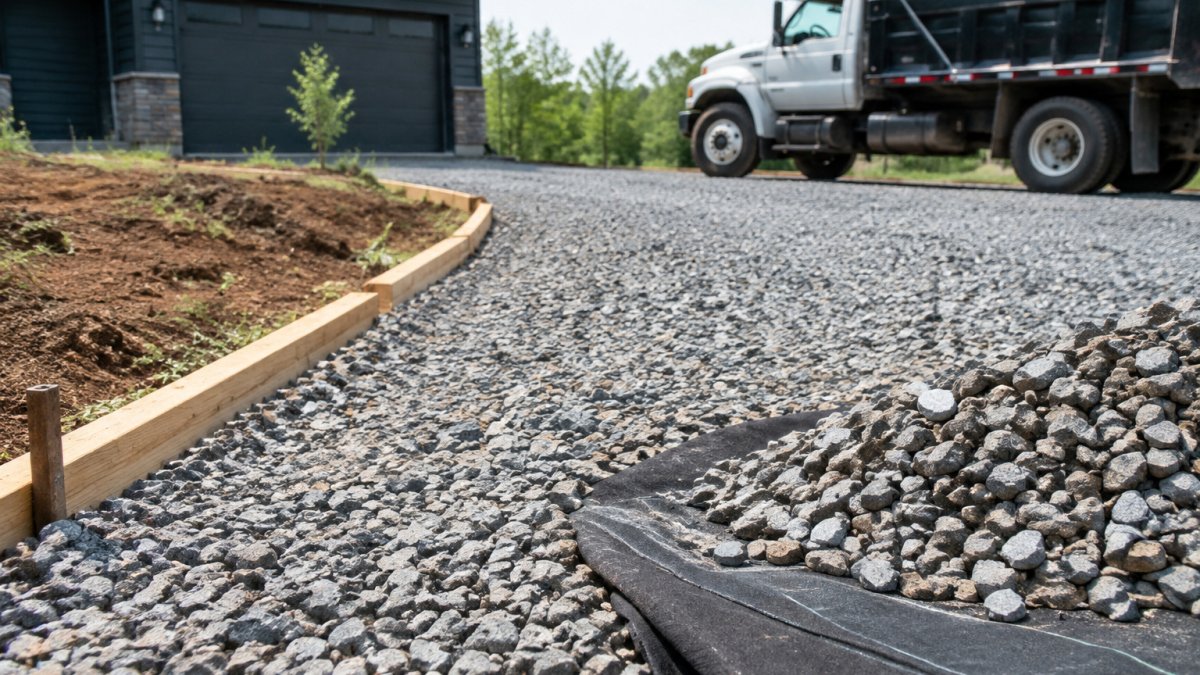
To keep gravel from washing away, crown the surface so the center sits slightly higher than the edges and water sheds to the shoulders instead of down the wheel paths. Add ditches, swales, or water bars to redirect flow, and use angular crushed stone that locks together rather than round rock.
- A driveway steeper than about 8 to 10 percent needs active water control, not just a crown.
- On moderate slopes, space water bars every 20 to 30 feet down the slope, angled to push water to the shoulder.
- Build water bars roughly 4 to 6 inches high and angled 30 to 45 degrees to the centerline.
- Place base in 4 to 6 inch lifts of crusher run with fines and compact each layer.
- Every ditch and swale needs an outlet, since a dead-end ditch holds water until the next storm blows it out.
Table of Contents
- Why Gravel Washes Away and How to Diagnose Your Problem
- Grade and Crown the Surface to Shed Water
- Cut Ditches, Swales, and Water Bars to Redirect Flow
- How to Keep Gravel From Washing Away on a Slope
- Best Gravel to Prevent Washout: Stone Size and Shape
- Steep Gravel Driveway Drainage Solutions That Hold Up
- How to Repair a Washed Out Gravel Driveway
- Get a Free Quote on Grading and Driveway Repair
- Frequently Asked Questions
Why Gravel Washes Away and How to Diagnose Your Problem
Gravel washes away when water moves across it faster than the stone can drain it. Learning how to keep gravel from washing away starts with one honest look at your driveway: where does the water come from, and where does it go?
Water is heavy and patient. A hard rain runs downhill, and a gravel surface with no slope, crown, or outlet forces it through the driveway, pushing stone into ruts and the ditch.
Reading Slope, Soil, and Runoff Source
Diagnose the problem before you buy a single load of stone. Three things decide how bad your washout will be:
- Slope: A flat driveway puddles. A steep one channels water fast. Both fail without drainage.
- Soil: Clay soil sheds water. Sandy or silty subgrade lets it sink and soften the base.
- Runoff source: Water from a hill, a gutter, or a neighbor's lot can cross your drive. That water often does more damage than rain falling on the driveway itself.
Walk your driveway after a storm. Note where the ruts start, where stone piles up, and where water leaves the surface. That tells you which fix below you actually need.
Grade and Crown the Surface to Shed Water
A gravel driveway should shed water off both edges like a roof. That shape is called the crown, and it is the single most important defense against washout.
Grade the surface so the center sits slightly higher than the edges, sending water to the shoulders instead of down the wheel paths. A perfectly flat driveway becomes a shallow bathtub.
You can crown a small driveway yourself with a box blade or hand rake. This guide on how to grade a yard for drainage covers measuring slope and moving soil step by step.
Cut Ditches, Swales, and Water Bars to Redirect Flow
When water crosses your driveway from uphill, grading alone will not save it. You have to redirect the flow before it reaches the stone.
- Ditch: A shallow channel along the uphill edge catches runoff and carries it away.
- Swale: A broad, grassy dip that moves water without a hard channel.
- Water bar: A raised ridge angled across the driveway that pushes water off to one side.
The key is the outlet. Every ditch and swale needs somewhere for the water to go, never a neighbor's yard or a foundation. A dead-end ditch just holds water until the next storm blows it out.
How to Keep Gravel From Washing Away on a Slope
Steep driveways usually need more than a crown. On a grade, water picks up speed, and fast water moves stone. Slowing the water down in short, controlled steps helps, and the steps needed depend on how steep the slope is, how long it runs, and what kind of soil sits under the stone.
Diagnose Your Slope Before You Build
Walk the driveway after a hard rain and measure the grade and length of the run, using a level and tape or a phone level app against a straightedge.
Then check the soil. Dig a test hole at the shoulder and squeeze a handful of subgrade. Clay holds together and sheds water, so runoff runs fast and erodes the edges.
Match the Fix to the Slope
The intervention depends on the slope and soil:
- Gentle slope (under about 8 percent), short run, clay soil: Crown the surface and shape firm shoulders. Add a shallow shoulder ditch on the uphill side if water crosses from above.
- Moderate slope (about 8 to 15 percent), any soil: Crown plus water bars spaced every 20 to 30 feet down the slope, angled to push water to the shoulder. Use angular crushed stone so the surface locks together.
- Steep slope (over about 15 percent) or long run: Water bars at closer spacing, a stabilized base, and a French drain or buried pipe at the toe of the slope. Add a gravel grid on sections where stone keeps creeping.
Build It in the Right Order
Installation sequence matters as much as the parts. A slope is typically built in this order:
- Shape the subgrade. Cut the crown and the shoulder fall first, before any stone goes down. A crown added on top of a flat subgrade will not hold its shape.
- Lay geotextile fabric over the subgrade on soft or sandy soil to keep soil from pumping up into the base.
- Place the base in lifts. Put down 4 to 6 inches of crusher run with fines, compact it, then repeat until you reach the desired base depth, usually 4 to 6 inches total for a residential drive, more on steep sections.
- Cut water bars into the surface as you build, not after. A water bar is a raised ridge angled across the drive at roughly 30 to 45 degrees to the centerline, typically 4 to 6 inches high, tied into a shoulder outlet.
- Top with angular surface stone and compact again so the surface knits into a firm sheet.
Watch out: a water bar that dead-ends at the shoulder without an outlet concentrates water at the edge and blows out the shoulder on the next storm.
A short, gentle slope may only need a crowned surface with good shoulders. A long, steep one generally needs water bars, interlocking stone, and an outlet at the bottom.
Best Gravel to Prevent Washout: Stone Size and Shape
Angular crushed stone with a mix of sizes generally holds up better than uniform round rock. Shape matters more than color or price.
| Stone Type | Holds Up to Water? | Best Use |
|---|---|---|
| Crushed stone, angular | Yes, locks together | Driveway surface and base |
| Crusher run with fines | Yes, compacts firm | Base layer and repair |
| River rock, rounded | No, rolls and shifts | Decorative beds only |
| Pea gravel | No, washes out fast | Paths and play areas |
Build in layers. A compacted base of larger crusher run goes down first, then a top layer of smaller angular stone. Work out the quantity with this guide on how much gravel you need for a driveway.
Steep Gravel Driveway Drainage Solutions That Hold Up
Steep gravel driveway drainage generally falls into two approaches: surface control and underground collection. Many steep drives benefit from both, depending on where the water comes from and where it can safely go.
Surface Control vs. Underground Collection
Surface control means crowns, water bars, and shoulder ditches that move water off the driving surface fast. Underground collection means a French drain or buried pipe that carries water away from the base before it soaks in and softens the subgrade. Surface control handles rain falling on the drive; underground collection handles water arriving from uphill or rising from a wet subgrade.
Use this breakdown to match the solution to the setting:
- Steep driveway with water crossing from uphill: A ditch or swale on the uphill edge first, then water bars on the surface, then a culvert or French drain at the toe to carry the collected water under or away from the drive.
- Steep driveway with a wet, soft base: A French drain along the uphill shoulder and a geotextile-lined base to keep water from softening the subgrade. Surface stone alone will keep punching down until the water is removed.
- Garden path or walkway on a slope: Shallow diversion dips and a stabilized edge, not a full French drain. Paths carry less water and need less infrastructure.
Design the Outlet First
The outlet is the part most homeowners skip, and it decides whether the system works. A French drain or ditch that dead-ends just holds water until the next storm blows it out.
Discharging concentrated flow onto bare soil or a steep bank can move the erosion downstream, so spreading the flow with riprap or a level spreader helps it leave the pipe slowly and broadly.
Installation Specs That Hold Up
- French drain: A trench roughly 12 to 18 inches wide and 18 to 24 inches deep, lined with geotextile fabric, filled with washed angular stone around a perforated pipe, and topped with fabric and stone or soil. Slope the pipe at about 1 percent so water keeps moving.
- Culvert: Size the pipe to the ditch or stream it carries, set it below the drive surface with compacted fill over it, and armor both ends with riprap so water does not scour around the pipe.
- Riprap outlet: Large angular rock, typically 6 to 12 inches, placed at the outlet to slow water and stop scour. Line the area under the rock with fabric so soil does not wash out between stones.
Post-Storm Inspection Checklist
Check the system after every heavy rain, not just once a year:
- Look for new ruts or stone piles at the shoulder, a sign a water bar or crown has failed.
- Clear debris from ditch and culvert inlets before the next storm.
- Check the outlet for scour, undercutting, or clogging.
A clogged outlet turns a working drain into a dam. A short walk after each storm can help catch problems early.
How to Repair a Washed Out Gravel Driveway
Repair starts at the cause, not the rut. Filling a rut without fixing the water means you will fill it again after the next storm.
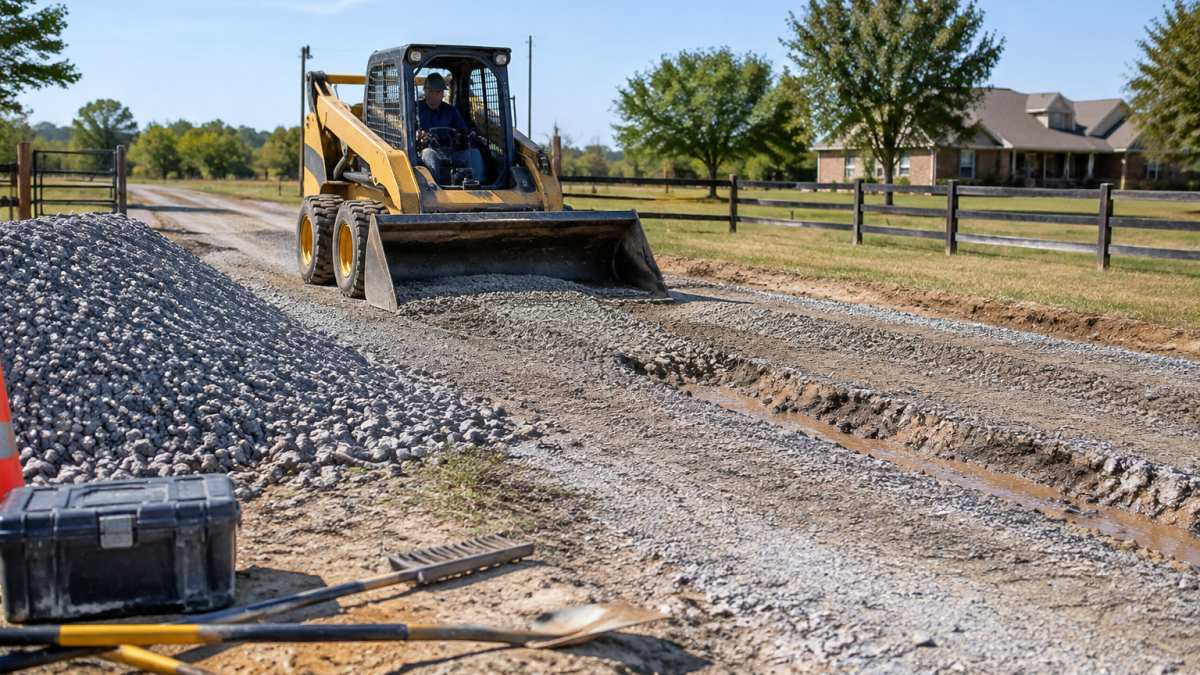
A typical repair order is:
- Clear the rut and any loose stone down to firm ground.
- Fix the water path first: reshape the crown, clean the ditch, or add a water bar.
- Fill in compacted layers, not one deep dump.
- Top with angular stone and compact again.
- Check the outlet so water has somewhere to go.
For a deeper walkthrough of the repair method, see how to fix ruts in a gravel driveway. If the washout is large or the base is gone, professional repair and gravel spreading is the faster route: gravel driveway repair and gravel spreading covers what that job involves.
Get a Free Quote on Grading and Driveway Repair
Most washouts come down to water with nowhere to go. Fix the grade, add drainage, and use the right stone, and your driveway will hold through the rainy season.
If you would rather hand the job to a crew, NexGen Dirt & Haul handles grading, driveway repair, and small excavation for homeowners, landlords, and contractors. Text us a photo of your driveway to get a quote. Get a free quote and get your driveway back in shape.
Frequently Asked Questions
What is the best way to prevent gravel from washing away?
Fix the water, not just the stone. Grade the surface so it crowns in the middle and sheds water to the sides, cut a ditch or swale along the low edge, and add water bars on any slope. Then top it with angular crushed stone that locks together instead of round river rock that rolls. Compacting each layer during installation matters as much as the material itself. If water still crosses the drive from uphill, a French drain or culvert may be needed to carry it under or around the surface.
What is the best gravel to prevent washout?
Angular crushed stone in the 1- to 2-inch range, often sold as #3 or #57 depending on the yard, holds up best because the fractured faces interlock. Round stone like river rock and small pea gravel slide off each other and wash out fast on any slope. Build a base layer of larger crushed stone, compact it, then add a top layer of smaller angular gravel. A geotextile fabric under the stone keeps soil from pumping up and mixing with the aggregate.
Do water bars help prevent gravel driveway washouts?
Yes. A water bar is a shallow ridge angled across the drive that catches fast-moving water and pushes it off to one side before it picks up speed and carries stone away. On steep gravel driveways they are one of the cheapest fixes available, and they work best spaced every 20 to 50 feet depending on how steep the grade is. Inspect them after heavy rain, since a clogged or flattened water bar stops doing its job and the washout returns.
How do you repair a washed-out gravel driveway?
Wait for the ground to dry, then fill the ruts and channel with angular crushed stone in lifts, compacting each lift before adding more. Rake the surface back to a crown so water sheds to the edges, and rebuild or clear the ditch on the low side. If the same spot washes out every storm, the repair will not hold until you fix the drainage feeding it, which may mean a culvert, swale, or regrading the slope. A contractor can diagnose that before you spend money on stone that washes away again.
