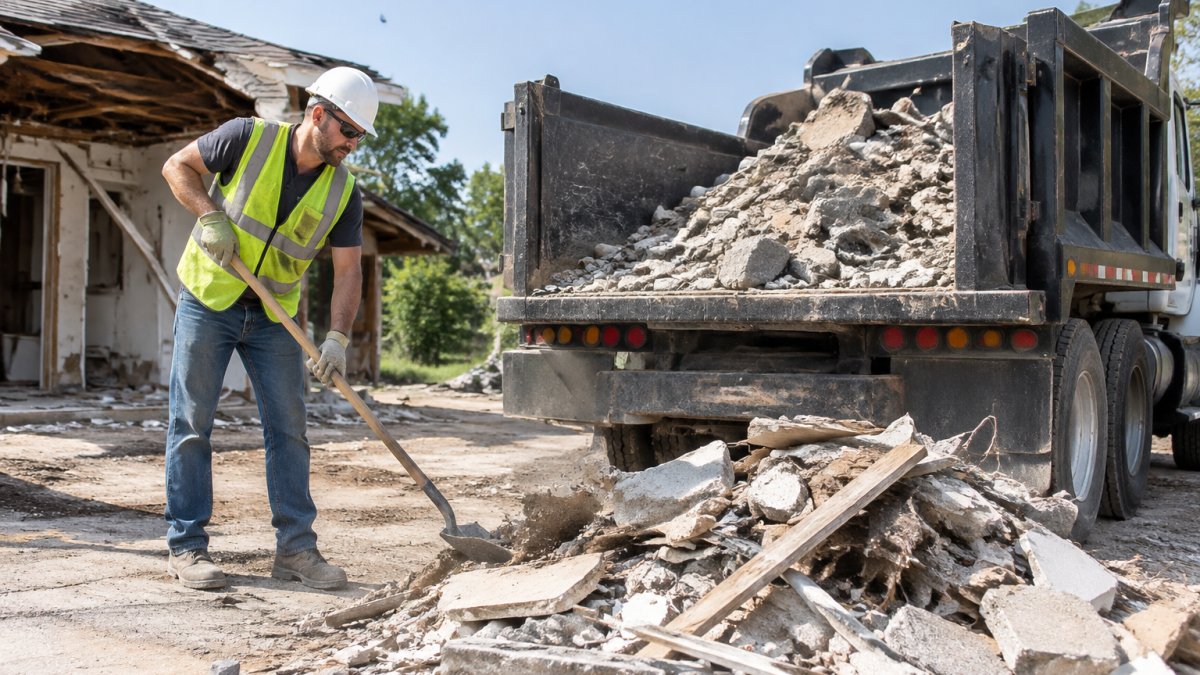
Last Updated: November 12, 2026
Quick Summary
The best way to clear construction debris depends on how much there is. Small jobs can use contractor bags and a pickup, mid-size jobs need multiple trips or a small dumpster, and large cleanouts usually call for a roll-off dumpster. Sorting materials before disposal can also lower costs.
- A full-size pickup bed holds roughly 2 to 3 cubic yards of loose debris.
- Once debris passes about 3 cubic yards, repeated pickup trips stop making sense.
- Heavy materials like concrete fill a dumpster quickly, so watch the weight limits.
- Separate debris into wood, drywall, metal, roofing, concrete, and general trash piles.
- Ask the provider about rental period, included weight allowance, and overage charges.
Table of Contents
- Matching Your Debris Removal Method to Project Size
- How to Sort Construction Debris Before Disposal
- Step-by-Step: How to Clear Construction Debris
- Construction Dumpster Rental: Options, Placement, and Permits
- Where to Dump Construction Debris Locally
- Construction Debris Removal Cost: What Drives the Price
- Recycling Construction Debris to Cut Disposal Volume
- Request Your Free Quote for Debris Cleanup
- Frequently Asked Questions
Matching Your Debris Removal Method to Project Size
The right way to clear construction debris depends mostly on how much of it there is. A bathroom remodel and a full teardown need very different plans. Start by estimating the volume before you choose a method, because the wrong choice costs time and money either way.
A practical way to estimate is to count pickup-truck loads. A standard full-size pickup bed holds roughly 2 to 3 cubic yards of loose debris, and a level load is closer to 2. Once you have a rough count, match it to the guide below.
Small projects: contractor bags and pickup
For small projects, heavy-duty contractor bags and a single pickup trip are often enough. This works well for drywall scraps, trim, flooring pieces, and light demolition from a single room.
Keep the bags manageable. Overfilled bags split, and sharp debris punches through thin plastic. Double-bag anything with exposed nails or broken glass, and tape the bag closed before you move it. Watch out: a bag that feels light at the top can still get heavy once tile or drywall chunks settle to the bottom, so lift with your legs.
Mid-size projects: multiple trips or a small dumpster
Once debris passes about 3 cubic yards, repeated pickup trips stop making sense. For brush cleanup, overgrowth removal, or small-lot clearing in Norman, Moore, or Oklahoma City, see our land-clearing services.
Large projects: when a roll-off dumpster makes sense
A roll-off dumpster makes sense once debris starts piling up faster than you can haul it. Full-house cleanouts, roof tear-offs, and concrete or masonry removal usually call for one. Renting one container for a set period is often simpler than making repeated trips.
Watch the weight limits. Heavy materials like concrete and dirt fill a container quickly, so a dumpster that looks half-empty can still be over its load limit.
Full-service hauling: when to hand off the whole job
If the debris is mixed, heavy, or hard to access, a full-service hauler that loads, sorts, and disposes of everything may be worth considering. Ask the hauler where the material goes before you book.
How to Sort Construction Debris Before Disposal
Sorting before disposal can lower what you pay and keep you on the right side of local rules.
Separate debris into a few clear piles: wood, drywall, metal, roofing, concrete and masonry, and general trash. Check your local transfer station or hauler for what they accept before you start sorting.
Step-by-Step: How to Clear Construction Debris
Follow these steps to keep the job moving and avoid rework:
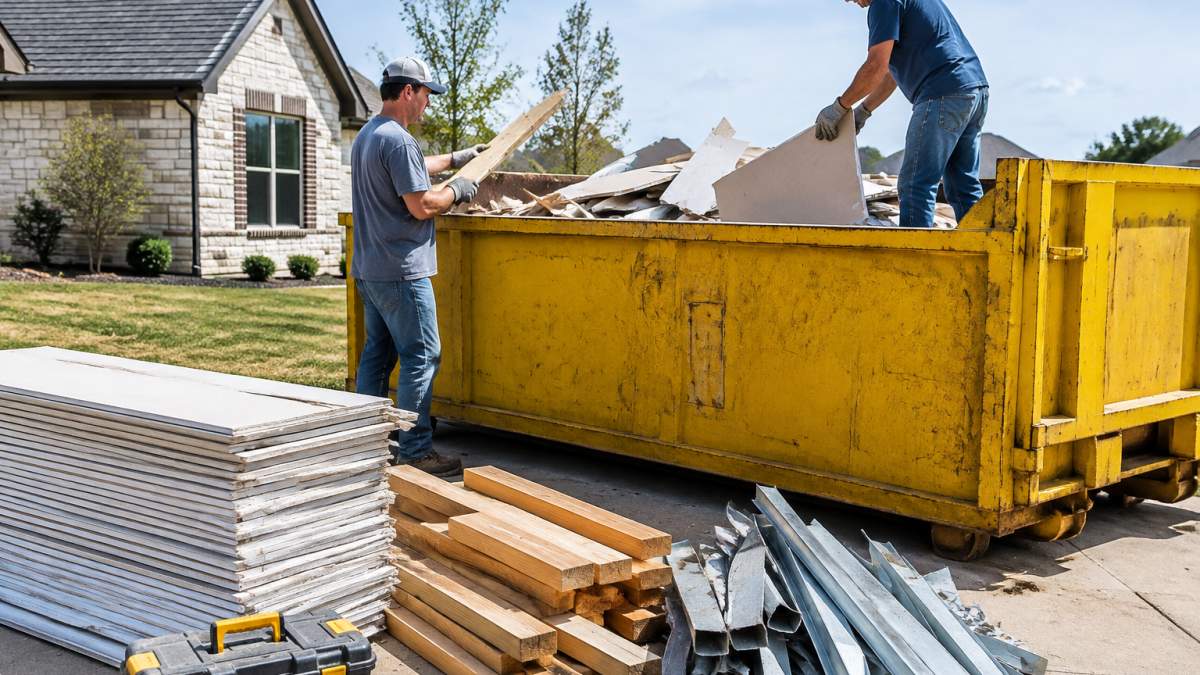
- Walk the site and estimate volume. Note the largest piles and any hazardous items like paint, solvents, or asbestos-suspect materials.
- Choose your method. Use bags and a pickup for small jobs, or order a roll-off dumpster for larger ones.
- Clear the path first. Remove tripping hazards and open a route from the work area to the container or truck.
- Sort as you go. Drop metal, wood, and drywall into separate piles so they are easier to load and recycle.
- Load heavy items low and evenly. Put concrete and masonry on the bottom and spread the weight across the container.
- Do a final site check. Walk the area for nails, screws, and small fragments before you call the job done.
The steps below cover the job from site walk-through to final check, so you can work through the clearing in order.
| Step | What to do | Timing or note |
|---|---|---|
| Walk the site and estimate volume | Note the largest piles and any hazardous items | Before you start |
| Choose your method | Bags and a pickup for small jobs, dumpster for larger | Based on volume |
| Clear the path first | Remove tripping hazards, open a route to the container | Before loading |
| Sort as you go | Separate metal, wood and drywall into piles | During the job |
| Load heavy items low and evenly | Concrete and masonry on the bottom, weight spread out | During loading |
| Do a final site check | Walk the area for nails, screws and fragments | Before calling it done |
Construction Dumpster Rental: Options, Placement, and Permits
Placement and paperwork matter for larger jobs. Check with your local government and HOA about rules for placing a container.
Ask the provider about the rental period, the included weight allowance, and what happens if you go over. Before booking a Norman dirt delivery, check this list of what to verify in a quote. Confirm the placement spot before delivery day. A driveway works well, but the container needs clear access for the truck to drop and pick it up.
Where to Dump Construction Debris Locally
Disposal options vary by area, and rules change. Start with your local municipal solid waste office or the transfer station nearest you. Ask which materials they accept, whether they charge by weight or by load, and whether they require a receipt.
Some facilities separate yard waste, recyclable metal, and clean concrete into different drop-off areas. If you need local dirt, gravel, or aggregate delivery in Norman, Moore, or Oklahoma City, view our delivery options. Calling ahead saves a wasted trip. You can also look for a licensed hauler if you would rather not transport the load yourself.
Construction Debris Removal Cost: What Drives the Price
Pricing depends on several factors, including the amount of debris, the type of material, how long you need the container, and how far it has to travel to the disposal site. Heavy materials like concrete usually cost more to dispose of than lighter debris because they weigh more.
The biggest driver is whether you are charged by volume or by weight. To understand property cleanup scope, pricing factors, and how to verify a crew in OKC, read our cleanup services guide. Pricing depends on several factors, including the type of material and how long you need the container.
Other cost drivers to plan for:
- Rental duration. Keep the container only as long as the work takes.
- Delivery and access. A container dropped in a driveway is cheaper than one that requires a long carry or a street permit. Tight access or a long hose run on a vacuum truck adds labor.
- Mixed-load and sorting fees. Facilities often charge more for mixed construction and demolition debris than for source-separated loads, and some reject loads with visible trash contamination.
- Hazardous and special materials. Paint, solvents, asbestos-containing material, and treated wood usually cannot go in a standard container and need separate disposal, which carries its own fee.
- Local tipping fees. Landfill and transfer station tipping fees vary by region and are passed through in the container price, so the same size container can cost noticeably more in one area than another.
For current prices and a quote based on your project, check NexGen Dirt & Haul's pricing page or contact us directly.
Recycling Construction Debris to Cut Disposal Volume
Recycling reduces the amount of material headed to the landfill and can lower your disposal costs. Clean metal, concrete, untreated wood, and some cardboard are commonly accepted at recycling facilities.
Reuse also helps. Salvageable doors, fixtures, and lumber can often be donated or resold. Sorting debris at the start of the job makes both recycling and reuse much easier.
Request Your Free Quote for Debris Cleanup
Clearing construction debris is easier when you know the volume, the materials, and the right disposal option before the work starts. If you are weighing bags, a dumpster, or a full hauling service, start by sizing up the job and comparing your options.
When you are ready, request your free quote for debris cleanup from NexGen Dirt & Haul. Send photos of the project and we will walk you through the best way to clear it.
Frequently Asked Questions
How do I remove construction debris myself?
For small jobs, fill heavy-duty contractor bags, double-bag anything with sharp edges or exposed nails, and haul them to a local transfer station or landfill that accepts construction waste. Sort out metal, concrete and clean wood first, since many facilities charge less for or recycle these materials. Wear gloves, eye protection and sturdy boots, and lift with your legs. For anything larger than a few truckloads, a roll-off dumpster or a hauling service usually saves time and avoids repeated trips.
Should I rent a dumpster or hire a junk removal service?
A dumpster rental works well when you have a large, steady volume of debris and can load it yourself over a set rental period. A junk removal crew makes more sense when you have a one-time pickup, limited space for a dumpster, or no time to load. Compare the total cost of each option, including disposal fees and any extra charges for weight, and confirm what each price covers before booking.
Can construction debris be recycled?
Many construction materials can be recycled. Recycling usually depends on keeping materials separated, since mixed loads are harder to process and may be sent to landfill. Ask your hauler or local facility which materials they accept separately and whether they offer a reduced rate for sorted loads.
What construction materials should be separated before disposal?
Separate metal, clean wood, concrete and masonry, drywall, roofing, and cardboard before disposal. Keep hazardous materials such as paint, solvents, batteries, and treated wood apart from general debris, since most facilities restrict them. Sorting reduces the volume going to landfill and can lower disposal costs, but confirm local rules for each material before you haul it.
