Last Updated: November 2, 2026
Quick Summary
Many towns require drainage permits when your project crosses a set threshold for soil moved or ground covered, such as regrading a large share of your lot or adding impervious surface. A drainage permit is official approval from your local building department to change how water moves across your property, so call before digging.
- A grading permit covers earthwork, while a drainage permit focuses on where water ends up after the work.
- Most states follow the reasonable use doctrine, which bars changes that unreasonably harm a neighbor.
- A shallow French drain that stays inside your own yard often needs no permit at all.
- Pull your deed and plat before you dig, because you cannot block or build over a drainage easement.
- If your project needs a stamped site plan, a licensed civil engineer must prepare it no matter who digs.
Table of Contents
- When Does Yard Work Require a Drainage Permit?
- Understanding Yard Drainage Permit Requirements
- Stormwater Runoff Rules for Homeowners
- French Drain Permit Requirements and Exceptions
- Drainage Easement Rules Every Property Owner Should Check
- How to Apply for a Drainage Permit Step by Step
- DIY vs. Hiring a Contractor for Yard Drainage Work
- Text a Photo to NexGen Dirt & Haul for a Straight Quote
- Frequently Asked Questions
When Does Yard Work Require a Drainage Permit?
Most homeowners don't learn they needed a drainage permit until a neighbor complains or an inspector shows up. Rules vary block by block, but the trigger is usually the same.
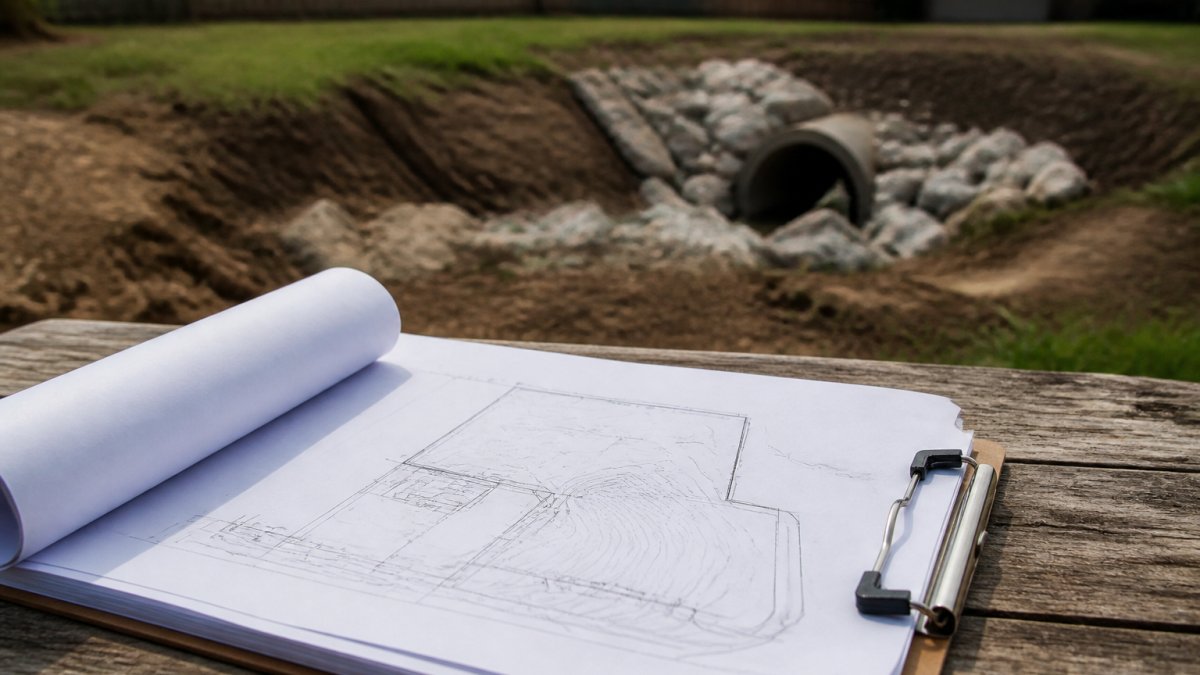
A drainage permit is official approval from your local building department to change how water moves across your property.
Homeowners who call before digging generally have an easier time than those who call after.
Land Disturbance Thresholds That Trigger Review
Land disturbance means any activity that moves or exposes soil. Local rules often tie permit requirements to a square-footage threshold, and the number changes from one municipal code to the next.
Common triggers for a review:
- Regrading a large share of your lot
- Adding a patio, shed pad, or driveway that creates new impervious surface
- Cutting a new swale or ditch that redirects surface water
Small projects often skip the process. Big dirt movement rarely does.
Grading Permits vs. Drainage Permits
These two get confused all the time. A grading permit covers earthwork: how much soil you move, where it goes, and how the site holds up during construction. A drainage permit focuses on where water ends up after the work.
Some building departments issue both under one application; others split them. Ask which one your project needs before you file, the wrong form resets the clock.
Understanding Yard Drainage Permit Requirements
The core of yard drainage permit requirements is paperwork proving your plan won't push water onto someone else's land. Most applications ask for the same handful of documents.
Expect to supply:
- A site plan showing the property lines and where water currently flows
- A property survey if boundary lines or easements are unclear
- Details on your proposed drainage system, including pipe size and outlet location
Site Plans, Surveys, and Engineering Documents
A simple site plan sketch works for small jobs in many towns. Larger projects may need a stamped plan from a licensed civil engineering firm.
The survey matters more than people think. If your planned outlet sits inside a utility easement, the whole design can fall apart at review. Check that first.
Stormwater Runoff Rules for Homeowners
Stormwater runoff rules for homeowners exist to stop one yard's fix from becoming a neighbor's flood. The principle: water that left your property before should leave the same way after. That principle also drives most neighbor disputes over drainage.
The Legal Rule Behind Most Runoff Disputes
Most states follow some version of the reasonable use doctrine for surface water: a landowner may change how water flows across their own property, but not in a way that unreasonably harms a neighbor.
Two related legal theories show up again and again:
- Nuisance. If your regrading or new impervious surface sends concentrated water onto a neighbor's yard, driveway, or foundation, they may have a private nuisance claim. Courts weigh whether the harm is substantial and whether your land use was reasonable.
- Trespass. Where water is deliberately channeled, a pipe outlet pointed at a property line, a swale cut to dump onto the neighbor, some courts treat it as trespass rather than nuisance.
A drainage easement can change the analysis entirely. If an easement gives water a legal path across a property, the neighbor generally cannot block it, and the easement owner generally cannot expand it beyond its historic use.
What to Do When a Neighbor's Runoff Floods Your Yard
A paper trail is usually the first step before involving a lawyer. The sequence below resolves many disputes:
- Document the problem. Dated photos and video of standing water, erosion, and the water's path. Note rainfall dates so the pattern is clear.
- Pull the plat and deed. Confirm whether a drainage easement or recorded drainage plan already governs how water moves between the properties.
- Check the local ordinance. Many cities prohibit discharging water onto adjacent property or into the public right-of-way without approval. Ask code enforcement whether the neighbor's work was permitted.
- Talk to the neighbor in writing. A polite letter describing the problem and requesting a fix creates a record and often resolves things before they escalate.
- Escalate to the city. If the work was unpermitted or violates the ordinance, code enforcement can require correction, often faster and cheaper than court.
- Consider mediation or legal advice. For disputes that survive the first five steps, a real estate attorney can advise on nuisance and trespass claims under your state's rule.
Watch out: retaliating with your own drainage changes, regrading to push water back or blocking a neighbor's outlet, can turn you from the harmed party into the defendant and violate the same ordinance you're relying on.
What to Do Before You Change Your Own Drainage
The safest path is to design so that the rate and direction of runoff leaving your property does not increase. That means:
- Keeping new impervious surface to a minimum or offsetting it with a rain garden, dry well, or permeable pavers
- Directing downspouts and outlets to a legal discharge point on your own land, not at a property line
- Preserving any existing drainage easement and its historic flow path
That's why reviewers look hard at runoff mitigation. If your new grading sends more surface water toward a neighbor or the public right-of-way, expect conditions or a denial, and a stronger neighbor claim if you skipped the permit.
Federal, State, and Local Layers
Rules stack in layers. Federal clean water rules set the baseline, state agencies add their own, and your city or county writes the ordinance you actually deal with. The regulatory authority with real say over your yard is almost always local.
Most homeowners only need to talk to their city. The higher layers matter when a project touches wetlands, streams, or large disturbed areas.
French Drain Permit Requirements and Exceptions
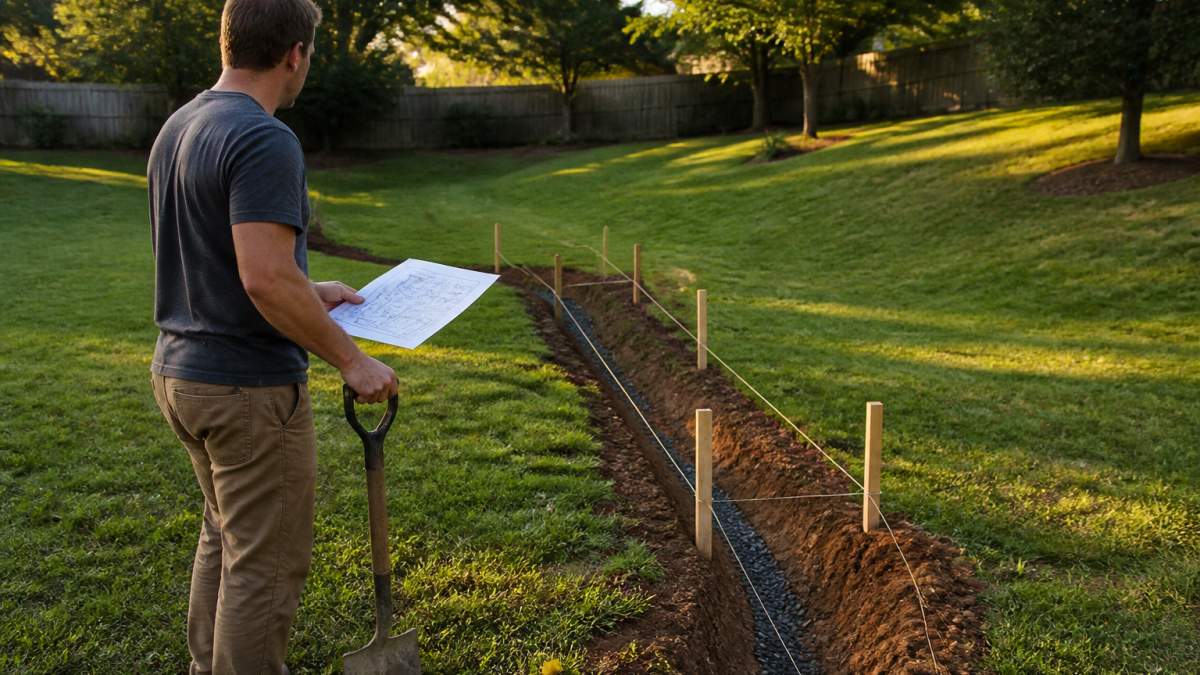
French drain permit requirements depend on where the drain goes and how much ground you open. A shallow drain that stays inside your own yard often needs no permit at all.
Our rule of thumb: if the water stays on your land and the trench is shallow, you're probably in the clear. If it crosses a line, reaches a storm system, or moves serious soil, call the city first.
Drainage Easement Rules Every Property Owner Should Check
Drainage easement rules are the single most overlooked item on this list. An easement gives someone else a legal right to use part of your land, often to carry water or access utilities.
Pull your deed and plat before you dig. If a drainage easement runs through your planned trench line, you cannot block it or build over it.
How to Apply for a Drainage Permit Step by Step
The application is usually the easy part; the prep work is where projects stall. Follow this order and you'll skip most of the back-and-forth.
- Call your city building department and describe the project in plain terms.
- Ask which permit applies and what documents they require.
- Pull your property survey and plat.
- Sketch a site plan with existing and proposed grades.
- Complete the permit application and pay the fee.
- Submit and respond to reviewer comments.
- Schedule the inspection before you backfill anything.
What a Drainage Permit Actually Costs
Most guides stop at "pay the fee" and never tell you what the fee is. Here's where the money actually goes.
- Application and filing fee. Grading and drainage permits are typically priced on a sliding scale tied to square footage of land disturbance or project value. Your city's fee schedule is published online, ask the clerk for the exact line item before you budget.
- Plan review fee. Many jurisdictions charge separately to review a stamped site plan or engineering drawings, scaling with sheet count and stormwater design complexity.
- Inspection fee. Some towns fold inspections into the permit; others bill per visit. Ask whether reinspection after a failed check costs extra, that's where budgets quietly blow up.
Watch out: fee schedules change with each budget cycle, and a quote from a neighbor's project two years ago may be stale, confirm the current amount with the building department in writing before you write a check.
DIY vs. Licensed Professional: Who Can Legally Do What
This question decides whether a project is a weekend job or a contract. The line is drawn by your state's licensing board and local code, not by how confident you feel with a shovel.
Tasks a homeowner can generally perform without a license:
- Hand-digging a shallow French drain or swale that stays entirely inside your own property and stays under the local disturbance threshold
- Minor regrading that does not change the direction of surface water leaving the lot
- Installing a surface catch basin or downspout extension that discharges to a legal outlet on your own land
Tasks that typically require a licensed or certified professional:
- Any work that needs a stamped site plan or engineering seal, most jurisdictions require a licensed civil engineer or surveyor to prepare and seal those documents
- Cutting or connecting to a public right-of-way, storm sewer, or municipal drainage system, this almost always requires a licensed contractor and a separate right-of-way permit
- Work inside a mapped floodplain, wetland, or drainage easement, where a surveyor and often an engineer must sign off
A common pattern: homeowners can legally do the digging but cannot legally produce the paperwork the city requires to approve it. If your project needs a sealed plan, the engineer is not optional no matter who holds the shovel.
Where to Research Zoning and Property Information
Start with your county assessor and city planning office, both publish zoning designation maps and property records online in most places. Confirm your land use rules and any overlay districts before designing anything. Ask specifically for the floodplain map, the stormwater management ordinance, and the fee schedule; those three documents answer most questions that stall an application.
What to Expect During Inspection
An inspector checks that the work matches the approved plan, grade, pipe placement, and erosion control. Have the approved plans on site and the trench open.
Once the dirt work is approved, you'll need material to finish the job. You can order dirt, gravel, and aggregate delivery for the backfill and surface work.
Here is the application order the article recommends, from the first phone call to the final inspection.
| Step | What to do |
|---|---|
| 1 | Call your city building department and describe the project |
| 2 | Ask which permit applies and what documents they require |
| 3 | Pull your property survey and plat |
| 4 | Sketch a site plan with existing and proposed grades |
| 5 | Complete the permit application and pay the fee |
| 6 | Submit and respond to reviewer comments |
| 7 | Schedule the inspection before you backfill anything |
DIY vs. Hiring a Contractor for Yard Drainage Work
You can handle a small regrade yourself. The question is whether the rules and risk make it worth it. Most permit trouble we see comes from homeowners guessing at compliance requirements instead of checking them.
DIY makes sense when:
- The work stays well under your town's disturbance threshold
- Water stays on your own property
- The slope change is minor and you have the tools
Hiring a pro makes sense when:
- The project needs a stamped plan or engineering review
- You're moving serious soil or cutting deep trenches
- An easement, floodplain, or public right-of-way is involved
If you're weighing the two, our guide on how to grade a yard for drainage walks through the DIY steps. See whether professional excavation is worth it. And if you'd rather hand off the grading and excavation, you can request a quote for dirt work and grading.
Text a Photo to NexGen Dirt & Haul for a Straight Quote
Permits, easements, and inspections are a lot to juggle. The dirt work itself doesn't have to be.
Snap a photo of your project and text it to us to request a quote.
Before you book, it helps to know what to check. Our guide on what to check before hiring dirt hauling covers material choice, load estimates, and quote details.
We use real equipment for professional results, from yard leveling to debris removal.
Get started with NexGen Dirt & Haul and get your drainage project moving.
Frequently Asked Questions
Do I need a permit for yard drainage work?
It depends on the scope. Small regrades that stay well under your local land disturbance threshold often need no permit, but any work that changes how water leaves your property, connects to a storm system, or crosses an easement usually does. Call your city building department and describe the project in plain terms before you dig. Drainage permits are typically tied to grading volume, impervious surface added, and proximity to protected drainage basins.
What are the stormwater runoff rules for homeowners?
Stormwater rules are typically set by federal law and local permits your city operates under. In practice, that means you cannot dump yard waste, concrete washout, or sediment into a gutter or ditch, and larger disturbances need erosion control and a silt fence. Stormwater runoff rules for homeowners also cover how much impervious surface you can add before runoff mitigation is required.
Can I redirect rainwater onto a neighbor's property?
Generally no. Most states follow some version of the reasonable use doctrine, which lets you drain water naturally but bars you from concentrating it and dumping it on a neighbor. Changing your grade so water pools against a neighbor's foundation or floods their yard can trigger a civil claim. Check your drainage easement rules first, then talk to your neighbor before you regrade.
How much does a drainage permit cost?
Fees vary by jurisdiction and are usually based on disturbed area or project valuation, so a small residential regrade often costs less than a full site plan review. Some cities charge a flat review fee plus an inspection fee. Ask your building department for the current fee schedule in writing before you apply, and budget for a property survey or civil engineering stamp if the project requires one.
